
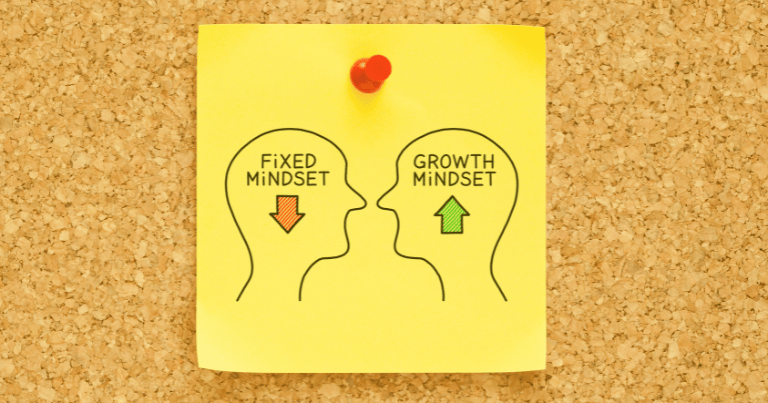
Growth Mindset vs. Fixed Mindset: The Belief That Shapes Your Success
Your beliefs about your own abilities shape your entire life. When you face a challenge—whether learning a new skill, recovering from a setback, or navigating a career transition—do you think, “I’m just not good at this,” or do you think, “I haven’t mastered this yet”?
That distinction isn’t just semantic. It represents two fundamentally different ways of viewing yourself and your potential. Psychologist Carol Dweck of Stanford University spent decades studying these contrasting belief systems, which she termed the “fixed mindset” and the “growth mindset.” Her research reveals that the mindset you adopt profoundly influences your motivation, resilience, relationships, and ultimately, your success.
Understanding the difference between these two mindsets—and learning how to cultivate a growth-oriented perspective—can unlock abilities you never knew you had.
What Is a Fixed Mindset?
A fixed mindset is the belief that your intelligence, talents, and abilities are static traits. People with this mindset see their qualities as unchangeable—something they’re born with that can’t be developed over time.
When you operate from a fixed mindset, every situation becomes a test of your worth. You constantly ask yourself: Will I succeed or fail? Will I look smart or foolish? Will people think I’m talented or lacking?
Characteristics of a Fixed Mindset
People with fixed mindsets typically:
- Avoid challenges because failure might expose their limitations
- Give up easily when obstacles appear, interpreting difficulty as proof they lack ability
- See effort as fruitless since they believe talent should come naturally
- Ignore useful feedback because criticism feels like a personal attack
- Feel threatened by others’ success, viewing it as a reflection of their own inadequacy
This mindset creates a self-fulfilling prophecy. By avoiding challenges and giving up quickly, people with fixed mindsets limit their opportunities to grow—which reinforces their belief that they can’t improve.
The Internal Dialogue of a Fixed Mindset
The fixed mindset generates a harsh internal voice:
- “I’m not a math person.”
- “I’ll never be good at public speaking.”
- “They’re naturally talented; I’m not.”
- “If I have to work this hard, I must not be smart enough.”
These thoughts feel like objective assessments, but they’re actually self-imposed limitations. They prevent you from stretching beyond your current abilities and discovering what you’re truly capable of achieving.
What Is a Growth Mindset?
A growth mindset is the belief that your abilities can be developed through dedication, strategy, and hard work. People with this perspective see their current skill level as a starting point, not a finish line.
When you adopt a growth mindset, challenges become opportunities rather than threats. Failure transforms from a verdict on your worth into valuable feedback. The question shifts from “Am I good enough?” to “How can I improve?”
Characteristics of a Growth Mindset
People with growth mindsets typically:
- Embrace challenges as chances to learn and expand their capabilities
- Persist through setbacks, viewing obstacles as part of the learning process
- See effort as the path to mastery rather than a sign of deficiency
- Learn from criticism by extracting useful insights
- Find inspiration in others’ success and use it as motivation
This mindset doesn’t mean believing everyone can become anything with enough effort. Rather, it recognizes that everyone can improve with practice and effective strategies.
The Internal Dialogue of a Growth Mindset
The growth mindset cultivates a more encouraging inner voice:
- “I’m not good at this yet, but I can learn.”
- “This is hard, which means I’m developing new skills.”
- “Mistakes show me where to focus my efforts.”
- “If they can do it, I can learn how.”
- “What strategy can I try next?”
This shift in self-talk creates a completely different relationship with learning and achievement.
The Science Behind Mindsets: What Neuroscience Reveals
The growth mindset isn’t just positive thinking—it’s grounded in neuroscience. Research on neuroplasticity has demonstrated that the adult brain remains capable of forming new neural connections throughout life.
In a landmark 2004 study by Draganski and colleagues, researchers taught adults to juggle and used brain imaging to track changes over time. After three months of practice, participants showed measurable expansion in brain regions associated with processing visual motion. When they stopped practicing, those brain changes decreased. The study provided concrete evidence that learning physically reshapes the brain—even in adulthood.
Neuroscience research on mindsets reveals even more. When students with different mindsets make mistakes on tests, brain scans show striking differences. Those with a fixed mindset display minimal brain activity when reviewing their errors—they essentially disengage from the learning opportunity. Students with a growth mindset, however, show strong activation in regions associated with learning and error correction. Their brains process mistakes more deeply, extracting lessons that improve future performance.
The anterior cingulate cortex and dorsolateral prefrontal cortex—areas involved in monitoring errors and adapting behavior—show heightened activity in people with growth mindsets. This neurological difference helps explain why growth-minded individuals improve faster: their brains are literally more engaged in the process of learning from mistakes.
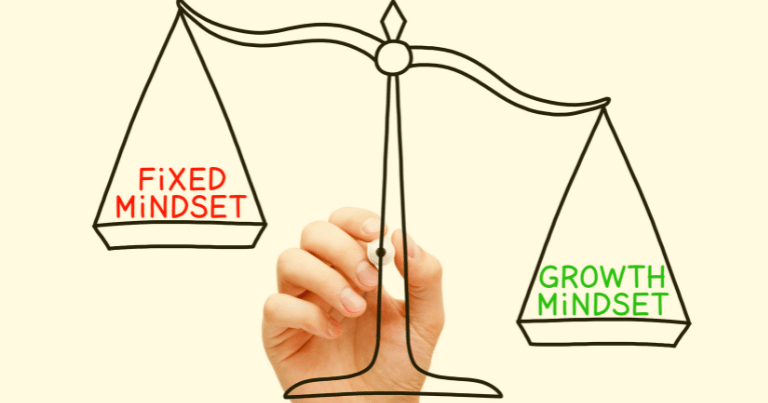
Growth Mindset vs. Fixed Mindset: A Side-by-Side Comparison
In Education
Fixed Mindset:
- Avoids challenging courses to protect GPA
- Studies to prove intelligence rather than to learn
- Views mistakes as failures that reflect ability
- Compares performance to others constantly
- Gives up when material becomes difficult
Growth Mindset:
- Seeks challenging courses that promote growth
- Studies to develop understanding and skills
- Views mistakes as information about what to work on
- Focuses on personal improvement over time
- Persists through difficulty using new strategies
Research backs up these differences. A national study of learning mindsets found that a brief online intervention teaching growth mindset concepts increased lower-achieving students’ grades by approximately 0.10 grade points. While that might sound modest, it translated to 4-8 percentage point increases in rates of being on track for graduation—effects comparable to much more intensive and costly educational programs.
In the Workplace
Fixed Mindset:
- Hides mistakes to appear competent
- Avoids projects outside comfort zone
- Feels threatened by talented colleagues
- Blames others when things go wrong
- Stops trying after setbacks
Growth Mindset:
- Discusses mistakes openly to solve problems
- Volunteers for stretch assignments
- Learns from colleagues’ expertise
- Takes responsibility and extracts lessons
- Adapts approach after setbacks
Consider the example of James Dyson, inventor of the bagless vacuum cleaner. Between 1979 and 1984, he created 5,127 different prototypes before achieving the design that worked. As Dyson explained in a 2013 BBC interview, “Every day you do experiments, and they fail, and you just have to get used to that failure… Failure is the best medicine—as long as you learn something.”
That perspective—treating failure as data rather than defeat—exemplifies the growth mindset in action. It’s what allowed Dyson to persist through years of setbacks and eventually create a billion-dollar company.
In Personal Relationships
Fixed Mindset:
- Believes partners should automatically understand you
- Views relationship conflicts as signs of incompatibility
- Feels judged when receiving feedback from partners
- Avoids difficult conversations
- Expects relationships to work effortlessly if they’re “right”
Growth Mindset:
- Recognizes that understanding requires communication
- Views conflicts as opportunities to strengthen the relationship
- Welcomes feedback as a chance to be a better partner
- Engages in hard conversations to resolve issues
- Understands that all relationships require effort and growth
Research by Dweck’s team found that people with fixed mindsets about personality were more likely to make stereotypical judgments of others and showed heightened attention to information that confirmed existing biases. Those with growth mindsets, by contrast, were more open to evidence that contradicted their initial impressions—a quality that strengthens relationships.
The Power of “Yet”: Reframing Failure as a Path Forward
One of the most powerful tools for cultivating a growth mindset is a simple three-letter word: yet.
Adding “yet” to statements of struggle transforms them from verdicts into work in progress:
- “I don’t understand this” becomes “I don’t understand this yet“
- “I’m not good at presenting” becomes “I’m not good at presenting yet“
- “This doesn’t work” becomes “This doesn’t work yet“
Dweck describes encountering a high school in Chicago that replaced failing grades with “Not Yet.” Rather than receiving an F that signified finality, students received feedback showing they were on a learning curve with more work to do. This simple change reframed failure from an identity (“I am a failure”) to a temporary state (“I haven’t succeeded yet”).
The word “yet” creates what Dweck calls “a path into the future.” It acknowledges current reality while asserting that change is possible. That subtle shift in language can dramatically affect how you respond to challenges.
Practical Strategies for Developing a Growth Mindset
If you’ve recognized fixed mindset patterns in yourself, the good news is that mindsets themselves can change. Here are evidence-based strategies for cultivating a growth-oriented perspective:
1. Reframe Your Self-Talk
Pay attention to the voice in your head. When you catch yourself thinking fixed mindset thoughts, pause and reframe them:
- Replace “I’m terrible at this” with “I’m still learning this”
- Replace “This is too hard” with “This will take time and effort”
- Replace “I give up” with “I’ll try a different strategy”
This isn’t about false positivity—it’s about accuracy. Your current performance doesn’t predict your future capability.
2. Focus on Process, Not Just Outcomes
Rather than fixating on results, celebrate the strategies and efforts that lead to improvement:
- “I’m proud of how I prepared for that presentation”
- “That was a smart strategy to break the project into smaller steps”
- “I really focused during that difficult conversation”
Research shows that process-focused praise creates more resilient learners than ability-focused praise. Children praised for effort (“You worked really hard on that”) showed greater persistence on challenging tasks than those praised for intelligence (“You’re so smart”).
3. Embrace Challenges as Learning Opportunities
Deliberately seek out tasks that stretch your current abilities. Operating in this space—just outside your comfort zone—is essential for growth.
When you encounter something difficult, remind yourself: “This is where learning happens.” The discomfort you feel isn’t a sign you lack ability; it’s a sign your brain is forming new connections.
4. View Failure as Data, Not Identity
When something doesn’t work, ask yourself:
- What went well that I can build on?
- What didn’t work that I should change?
- What did I learn that will help me next time?
- What different strategy could I try?
This analytical approach transforms failure from a judgment into useful information. As legendary basketball coach John Wooden said, “You’re not a failure until you start to assign blame.”
5. Celebrate Others’ Success
When you see someone succeed, resist the temptation to feel diminished. Instead, get curious:
- What strategies did they use?
- What can I learn from their approach?
- How does their success expand what I think is possible?
Viewing others’ achievements as inspiration rather than comparison reduces the threat response and opens you to learning.
6. Recognize That Effort Requires Strategy
A growth mindset doesn’t mean believing that effort alone guarantees success. Effective effort is directed effort—it involves:
- Using evidence-based strategies
- Seeking feedback and adjusting course
- Practicing deliberately on specific weaknesses
- Reflecting on what’s working and what isn’t
As Dweck’s later research clarified, praising effort is most effective when it’s effort combined with learning and improvement, not just “trying hard” without progress.
Real-World Applications: Mindset in Action
Overcoming Career Setbacks
When you face professional challenges—a project that fails, a promotion you don’t get, a business that struggles—your mindset determines your response.
A fixed mindset interprets these setbacks as evidence you’re not cut out for your field. A growth mindset sees them as part of the learning curve. The most successful people aren’t those who never fail; they’re those who extract lessons from failure and persist.
Learning New Skills
Whether you’re learning a language, mastering a software program, or developing public speaking abilities, a growth mindset dramatically accelerates progress.
Research on teaching students about neuroplasticity found that simply learning that the brain can grow stronger with practice increased students’ motivation and performance. Undergraduate students taught about neuroplasticity showed more enjoyment and persistence in challenging science courses.
Managing Health and Wellness
Mindset affects not just mental performance but physical health. Studies suggest that viewing health behaviors as learnable skills rather than fixed traits improves adherence to positive changes.
For instance, someone with a fixed mindset about fitness might think, “I’m just not an athletic person.” Someone with a growth mindset thinks, “I haven’t built that habit yet, but I can start small and improve over time.”
Common Misconceptions About Growth Mindset
As growth mindset has become more widely known, several misconceptions have emerged:
Misconception 1: Growth mindset means believing anyone can become anything.
Reality: Growth mindset recognizes that while everyone can improve, people have different starting points, resources, and interests. It’s about developing your potential, not claiming everyone can become Einstein with enough effort.
Misconception 2: Growth mindset is just about effort.
Reality: Effort matters, but effective effort requires strategy, reflection, and willingness to change approaches. Simply trying harder at an ineffective strategy isn’t growth mindset—it’s persistence without learning.
Misconception 3: Praising effort is always beneficial.
Reality: Praising ineffective effort can be counterproductive. The goal is to praise productive strategies and learning, not just “trying hard” regardless of outcome.
Misconception 4: You either have a growth mindset or you don’t.
Reality: Most people have elements of both mindsets that appear in different contexts. Someone might have a growth mindset about athletic ability but a fixed mindset about artistic talent. The goal is to recognize where fixed mindset thinking limits you and intentionally shift toward growth.
Why This Matters: The Long-Term Impact of Mindset
The implications of mindset research extend far beyond individual achievement. When organizations cultivate growth mindsets, they create cultures where innovation thrives, employees take calculated risks, and learning from mistakes is normalized rather than punished.
In education, shifting toward growth mindset principles means redesigning systems that currently reward perfection over progress. It means creating environments where students feel safe attempting challenging work without fear that mistakes will define them.
In families, it means changing how we talk to children—emphasizing their strategies and efforts rather than their innate intelligence. It means modeling our own growth by openly discussing our challenges and what we’re learning.
The research is clear: people with growth mindsets experience less stress, achieve more, maintain motivation longer, and recover more effectively from setbacks. They’re not just more successful—they’re more resilient and better equipped to navigate an unpredictable world.
Begin Your Mindset Transformation
Developing a growth mindset is itself a process—one that requires awareness, practice, and patience. Start by noticing when fixed mindset thinking appears:
- When do you avoid challenges?
- What triggers the voice that says “I can’t”?
- Where do you give up too quickly?
- Which areas of life feel most fixed to you?
Then, deliberately practice growth mindset responses in those situations. Remember that you won’t shift overnight. Decades of fixed mindset patterns won’t disappear immediately, and that’s okay.
The beauty of understanding mindsets is that the knowledge itself begins to change you. Once you see how your beliefs about ability shape your actions, you can’t unsee it. You become more aware of the choices you’re making and the opportunities you might be missing.
Your current abilities are a starting point, not a ceiling. The question isn’t whether you’re smart enough, talented enough, or capable enough. The question is: Are you willing to learn, to struggle, to fail, and to grow?
That willingness—that fundamental belief that you can develop through effort—makes all the difference.
Related External Links